
Neston (Wirral) Colliery

Phil Pritchard

The Neston Colliery (later known as “The Wirral Colliery”, and then even later as “The Wirral Colliery (1915)”), was situated on the eastern coastline of the Welsh Dee estuary, at the end of Marshlands Road (previously known as Colliery Lane) in Little Neston, Cheshire West, using a site that was made vacant by the demise of the Anglican Smelting Company.

The Anglican Smelting Company started mining coal at the site after its formation in 1858, to when the company was wound up in 1862, with auction sales of the company assets in 1863 and 1866. It was not long afterwards that the Neston Colliery Company was started up, using the Anglican Smelting buildings, mineshafts and mining equipment.

The new colliery was quite modern for its era, but it was a complicated story of continuous development. The developments were forced upon the owners and management by economics and had to be performed to remain in business.

Before the Neston (Wirral) Colliery era, the market for Neston coal was mainly local, expansion obviously involved more distant markets and transportation, hence the requirement for a railway connection.
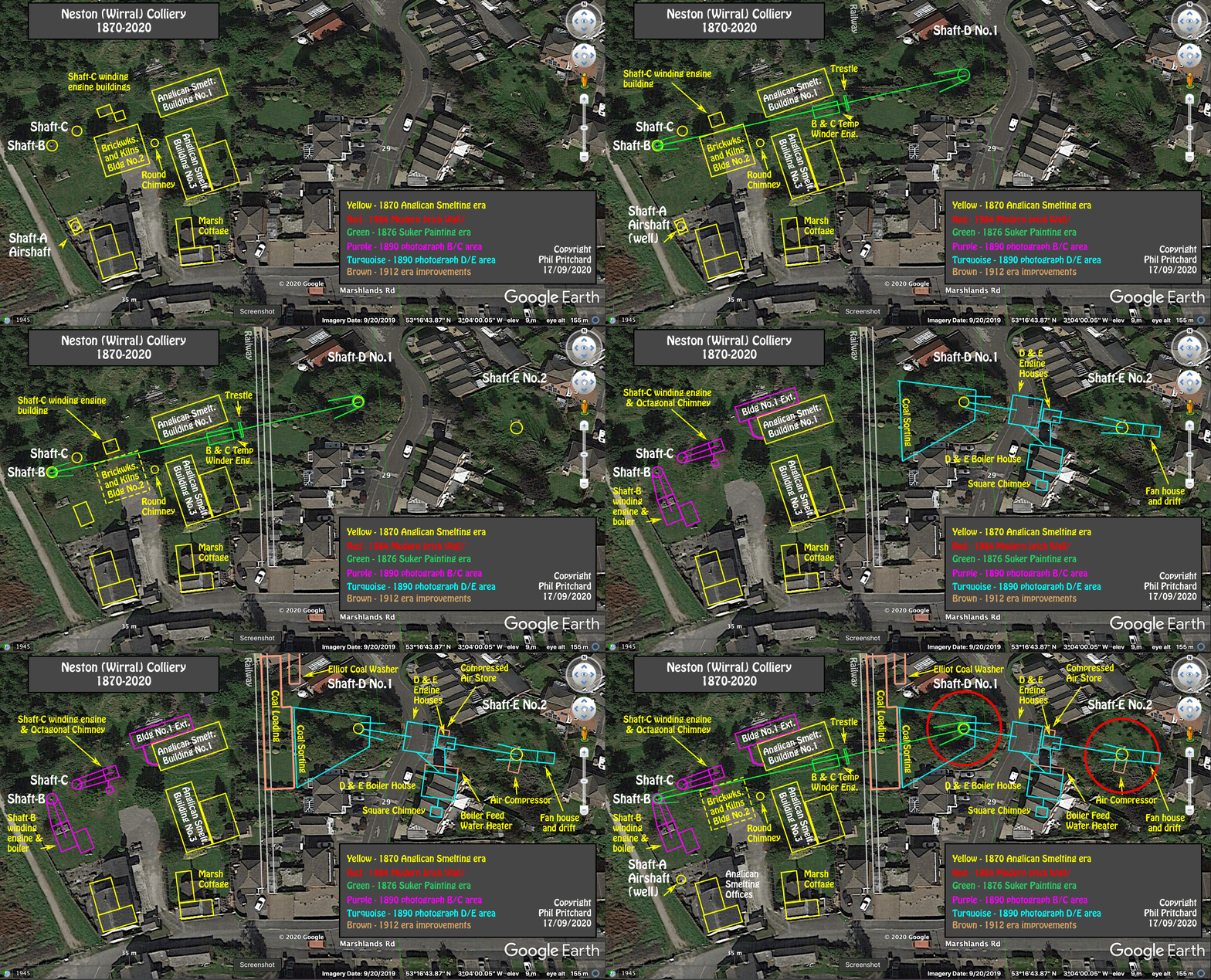
In 1876, the colliery was painted by a landscape artist, Mr. Arthur Suker, it is on display in the Williamson Art Gallery. It shows the old Anglican Smelting Company buildings which is most useful and shows changes that were being made by the Neston (Wirral) Colliery Company, the most important of which was the start of sinking Shaft-D (later known as the No.1 Shaft) and the older Shaft-C, both being wound by the same “double” winding engine. Luckily it also shows the headgear for the re-purposed Shaft-A, being used as an Airshaft…click here to read more.

In 1890, the colliery was photographed by a gentleman who was journeying along the North Wales coast, obviously photographing industrial operations. Luckily, he captured the Neston (Wirral) Colliery, just as the new Shaft-D was being completed, with the other new shaft, Shaft-E already completed…click here to read more.

The timeline details the most important changes at the colliery from Anglican Smelting days, to the modern age (2021)….click here to read more.

This is a moving image that shows the main stages of the colliery development superimposed on recent Google Earth aerial photography background, designed so that it is easier to visualise on the ground. Each stage will display for approx. 8 seconds before the next stage is displayed